
TL;DR
Thermal cameras detect water leaks by reading temperature differences in walls, floors, and ceilings. No drilling. No breaking tiles. No guesswork. A trained technician can pinpoint a hidden leak in minutes using infrared imaging, saving you thousands in unnecessary repairs.
Introduction
You know something is wrong. Your water bill is climbing, there’s a damp smell you can’t trace, or a patch on your wall that never quite dries out. But you can’t see anything obvious. No dripping tap. No visible crack. Just a nagging feeling that something is leaking somewhere inside your home.
The old way of finding that leak involved a lot of damage. Knock a hole in the wall here. Lift a tile there. Hope you guessed right. More often than not, homeowners ended up with a torn-apart bathroom and a plumber still not sure where the leak was coming from.
Thermal imaging changed that entirely.
At VIC Leak Detection, we use thermal cameras as part of our non-invasive leak detection process. Here is exactly how the technology works, and why it means we can find your leak without touching a single tile.
What Is a Thermal Camera?
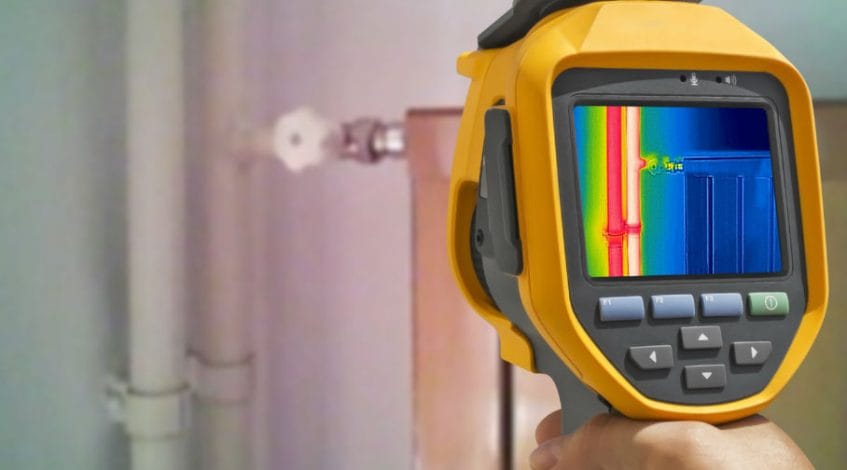
A thermal camera does not take a regular photograph. Instead of capturing visible light, it reads infrared radiation, which is the heat that every surface naturally emits. The camera converts those heat readings into a colour-coded image where warmer areas appear in one colour range and cooler areas in another.
To the naked eye, a dry wall and a wet wall look identical. To a thermal camera, they look completely different.
Water holds and transfers heat differently to plasterboard, timber, and concrete. When a pipe is leaking inside a wall, that moisture changes the temperature of the surrounding surface. The wet area either absorbs or releases heat faster than the dry material around it, creating a temperature contrast that shows up clearly on the thermal image.
That contrast tells our technicians exactly where the moisture is sitting, and by extension, where the leak is.
Why Does Water Show Up on a Thermal Camera?
The science behind it comes down to thermal mass and evaporative cooling.
Thermal mass refers to how quickly a material absorbs or releases heat. Water has a very high thermal mass compared to building materials. That means a wet patch in a wall heats up and cools down more slowly than the dry plaster around it. After a warm day or a hot shower, that difference becomes visible on a thermal camera as a distinct patch of contrasting temperature.
Evaporative cooling is the second factor. When moisture sits near a surface, it gradually evaporates, and evaporation draws heat out of that surface. This makes wet areas appear cooler than surrounding dry areas, which shows up as a clearly different colour on the thermal image.
Together, these two effects make hidden moisture highly visible to an experienced thermal camera operator, even when the surface itself looks completely normal.
How We Use Thermal Cameras to Find Your Leak
When our technicians arrive at your property, the thermal camera is one of several tools we bring. Here is how the process works in practice.
Step 1: Initial Assessment
We talk through what you have noticed. Rising water bills, damp smells, discolouration on walls or ceilings, soft spots in flooring. This helps us narrow down where we focus first. We also conduct a visual inspection of the property before any equipment comes out.
Step 2: Thermal Scan
We move the thermal camera methodically across the walls, floors, and ceilings in the suspected area. The camera produces a live image showing temperature variations across every surface. We are looking for patterns that suggest moisture, not just random temperature differences that occur naturally in building materials.
An untrained eye can misread a thermal image. Our technicians know the difference between a cold external wall, a recessed light creating a heat signature, and the specific pattern that wet insulation or a leaking pipe produces. That experience matters.
Step 3: Confirm With Supporting Tools
Thermal imaging alone tells us where moisture is. It does not always tell us the exact source. So once we identify a suspect area from the thermal scan, we use additional tools such as acoustic listening devices and moisture meters to confirm and pinpoint the precise leak location.
This combination approach is what allows us to be highly accurate before recommending any repair work. For more on how our full detection process works, see our Water Leak Detection page.
Step 4: Mark and Report
Once we have confirmed the location, we mark the exact spot on the surface. You receive a clear explanation of what we found and where. If a repair is needed, we can carry it out on the spot where possible, or provide a full report so your plumber can go straight to the source.
What Types of Leaks Can a Thermal Camera Find?
Thermal imaging is effective across a wide range of leak types. Here are the most common situations where we deploy it.
Leaks Inside Walls
This is where thermal cameras excel. A pipe running behind plasterboard that develops a slow leak will gradually wet the insulation and the back of the wall. That wet patch creates a clear thermal signature that we can trace from the outside surface without touching anything.
Under-Floor Leaks
Whether it is a pipe leak under timber floorboards or moisture beneath tiles, thermal imaging picks up the temperature contrast caused by water pooling beneath the surface. We scan the floor from above and identify exactly where the moisture is concentrated.
Slab Leaks
A slab leak occurs when a pipe beneath a concrete slab starts leaking. These are notoriously difficult to find with traditional methods because you cannot see or hear the leak from above. Thermal cameras pick up the heat transferred through the slab by the leaking water, helping us identify the zone before we recommend any concrete investigation.
Roof and Ceiling Leaks
After rain, moisture that has entered through the roof sits in the ceiling cavity and insulation. Thermal imaging can reveal exactly where that moisture has tracked to, even if it has travelled several metres from the actual entry point. This prevents unnecessary exploratory cutting and helps us direct any repairs precisely.
Bathroom and Kitchen Leaks
Showers, baths, and kitchen sinks are common sources of hidden moisture. A slow leak behind tiles or at a hidden junction can cause serious damage over months. Our thermal scan identifies the moisture pattern behind the tiling without any removal work required. See our Water Leak Detection page for more on what we look for in bathrooms and kitchens.
What Thermal Cameras Cannot Do (And Why That Matters)
We believe in being straight with our clients.
Thermal cameras are a powerful diagnostic tool, but they work best under the right conditions. For the temperature contrast to be visible, there generally needs to be a meaningful difference between the surface temperature and the ambient temperature. In some situations, such as a very slow seep in a thick concrete wall, or an internal space with very stable temperature, the contrast may be minimal.
That is why we never rely on thermal imaging alone. We combine it with acoustic listening equipment and moisture meters to build a complete picture. The combination of these tools is what gives us our accuracy rate and the confidence to back our results with a money-back guarantee.
If you want to understand more about how we combine different detection methods, get in touch with our team and we will walk you through the right approach for your specific situation.
What Happens After the Leak Is Found?
Finding the leak is the first step. What happens next depends on the type and location.
For straightforward leaks, our licensed plumbers can carry out the repair on the spot. For more complex situations, such as a pipe under a concrete slab or behind structural elements, we provide you with a fully documented report including the exact location, photos, and our recommended repair approach.
If you already have a plumber, we work alongside them. Many Melbourne plumbers call us specifically to locate a leak before they start digging, because our pinpoint accuracy means they dig once, in the right spot, and get the job done. .
Warning Signs You May Have a Hidden Leak Right Now
If any of these apply to your property, it is worth calling us before the damage gets worse:
- Your water bill has increased without any change in usage
- There is a damp or musty smell in a room with no obvious source
- You can see water stains on a ceiling or wall
- A section of flooring feels soft or slightly spongy
- Your water meter is still moving when everything in the house is turned off
- You have noticed mould appearing in an area that is not usually wet
A slow leak left undetected is not just a plumbing issue. It is a structural issue, a health issue, and an expense that grows every week it goes untreated. The sooner it is found, the less damage it causes.
Frequently Asked Questions
Does thermal imaging damage my walls or floors?
No. The camera reads heat from the surface without touching it. Nothing is drilled, cut, or removed during the thermal scan.
How long does a thermal camera inspection take?
Most residential inspections take between 45 and 90 minutes from arrival to confirmed result, depending on the size of the property and complexity of the suspected leak area.
Is thermal camera detection accurate?
Highly accurate when used correctly and in suitable conditions. We combine thermal imaging with acoustic and moisture detection tools to verify every finding before recommending any repair work.
Can you find a slab leak with a thermal camera?
Yes, in many cases. Hot water pipe leaks under slabs are particularly well suited to thermal detection because the hot water transfers heat through the slab clearly. Cold water slab leaks can also be identified depending on conditions. See our Slab Leak Detection page for more detail.
Do you work with plumbers?
Absolutely. Many Melbourne plumbing contractors use our detection service specifically so they can carry out repairs efficiently without unnecessary excavation. We pinpoint the location and hand the result to your plumber.
Book a Thermal Camera Leak Inspection in Melbourne
If you suspect a hidden leak anywhere in your home or commercial property, do not wait for it to get worse.
VIC Leak Detection uses thermal imaging as part of a comprehensive, non-invasive detection process that covers water leaks, pipe leaks, slab leaks, and more across all of Melbourne.
We find the leak or your money back.
Call 1300 583 595 or get a quote online today.
VIC Leak Detection serves all Melbourne suburbs including South Yarra, Brunswick, Richmond, St Kilda, Fitzroy, Doncaster, Glen Waverley, Dandenong, Footscray, and everywhere in between.