

TL;DR
You can check your water meter for a leak in under 15 minutes. Turn off every tap and appliance, read the meter, wait, then read it again. If the numbers moved, you have a hidden leak somewhere in your pipes. This guide walks you through exactly how to do it, what the results mean, and what to do next.
In This Guide
If you suspect a hidden water leak, your water meter is the first place to look. A higher-than-usual water bill, a damp smell you cannot trace, or a patch of flooring that never quite dries: these are all signs that something is quietly leaking inside your property.
Knowing how to check your water meter for a leak takes less than 15 minutes and costs nothing. It will not tell you exactly where the leak is, but it will tell you definitively whether one exists. That single confirmation can save you thousands of dollars in property damage by prompting action early.
This guide covers how to read your meter, how to perform a simple leak test, and what your results mean. If the meter confirms a leak, we also explain the next steps.
Why Your Water Meter Is Your Best First Tool
Your water meter records every litre of water that flows into your property. When all taps, appliances, and irrigation systems are off, that reading should be completely still. Any movement means water is moving through your pipes without an obvious reason.
This makes the meter a reliable, zero-cost way to confirm or rule out a leak before you call anyone or spend anything. It is the same check that professional leak detection technicians use as a first step at every property visit.
High water bills are one of the most consistent signs of a hidden leak. According to Yarra Valley Water, even a single dripping tap can waste up to 8,000 litres per month. A slow pipe leak inside a wall or under a slab can waste far more, and show nothing visible until structural damage has already begun.
How to Read Your Water Meter: A Quick Guide
Before you can run the leak test, you need to know how to read your meter. Most Melbourne properties use one of two meter types.
Understanding the Dials and Numbers
Most Australian water meters show a row of digits in kilolitres (kL). Black digits show whole kilolitres. Red digits (where present) show fractions of a kilolitre. Write down the full reading from left to right, including any red digits; these matter when you are watching for a slow leak.
Some newer meters are fully digital. These display the reading as a single number on an LCD screen. The reading process is identical: note the number before and after your test period.
What the Flow Indicator Tells You
Most water meters have a small red or blue triangular dial, or a rotating segment, called the flow indicator. This is the most sensitive part of the meter and the one to watch during a leak test.
When all water is off in your property, this indicator should be completely still. Even a very slow rotation, one that takes several minutes to complete a full turn, signals that water is moving through your pipes. That movement is caused by a leak, not a meter fault.
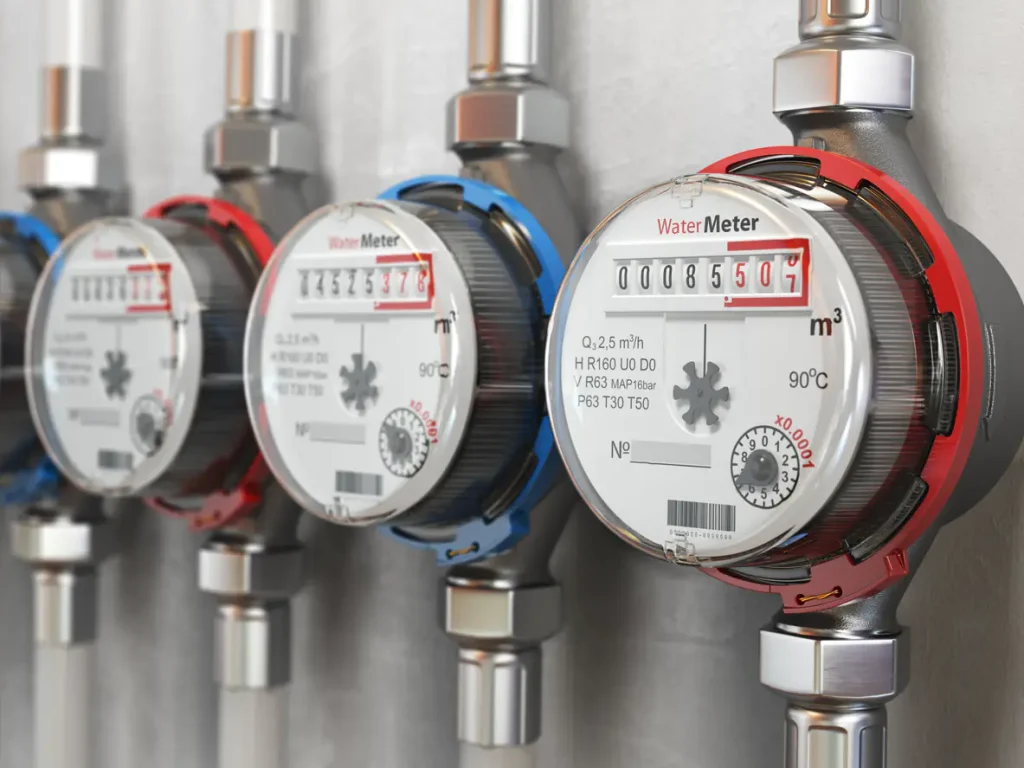
A water meter’s flow indicator is your first sign of a hidden leak. If it moves when all taps are off, call a specialist.
The 15-Minute Water Meter Leak Test (Step by Step)
This test works for any property type: house, unit, or townhouse. It takes between 15 and 30 minutes and requires no special tools.
- Turn off all water inside and outside the property. Switch off every tap, shower, toilet cistern fill valve, dishwasher, washing machine, and any outdoor irrigation timer. If your hot water system has a continuous flow valve, close that too. The goal is to have zero water use anywhere on the property.
- Locate your water meter and take a reading. Your meter is typically in a small underground box near the front of the property, close to the street boundary. Lift the lid and write down the full reading. Also note whether the flow indicator is moving, and in which direction.
- Wait 15 to 30 minutes without using any water. Do not flush a toilet, run a tap, or open the dishwasher. Even a single flush can invalidate the test. Set a timer and leave the meter alone for at least 15 minutes. For older properties or a suspected slow leak, wait 30 minutes.
- Return to the meter and take a second reading. Compare the new reading with the one you recorded before the test. Note whether the flow indicator has moved, and if the kilolitre total has changed at all, including the red (decimal) digits.
Meter confirmed a leak? Do not guess where it is. Call VIC Leak Detection; we locate the exact source without cutting tiles or breaking walls.
What Do the Results Mean?
Once you have your two readings, use the table below to interpret what you found.
| Meter Result | Flow Indicator | What It Means | Next Step |
|---|---|---|---|
| Numbers unchanged | Still | No leak detected at this time | Monitor your bill over the next quarter |
| Numbers unchanged | Slowly moving | Very slow leak possible | Repeat the test over 30 to 60 minutes, then call a specialist |
| Numbers changed slightly | Slowly moving | Slow hidden leak confirmed | Call a professional leak detection service |
| Numbers changed noticeably | Moving continuously | Active hidden leak confirmed | Call a professional immediately; shut off the water at the main valve |
Warning Signs to Look For Alongside the Meter Test
The meter test tells you whether a leak exists. These signs tell you how urgent it may be. If you notice any of the following alongside an active meter reading, the leak has likely been present for some time.
- Unexplained increase in your water bill with no change in usage
- Damp or musty smell in a room that has no obvious moisture source
- Water stains on ceilings or walls that were not there before
- Soft, spongy, or slightly sunken flooring
- Mould appearing in areas that are not typically wet
- Cracking or bubbling paint on an interior wall
- A persistently green or wet patch in the garden with no irrigation source
These warning signs, especially in combination with a meter reading that has moved, point to a hidden pipe leak, a slab leak, or an underground supply leak. Each type requires a different detection approach.
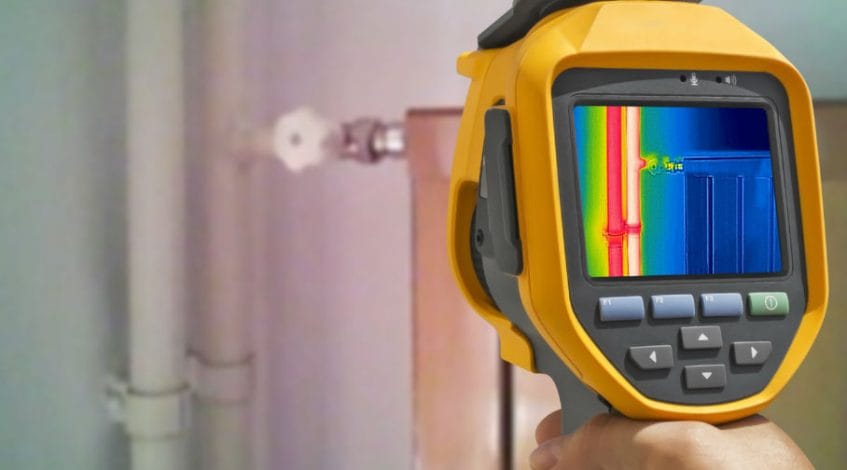
When the meter confirms a leak, VIC Leak Detection’s technicians use acoustic sensors and thermal imaging to pinpoint the exact location, without any digging or cutting.
Why Homeowners Should Not Stop at the Meter Reading
The meter test is a confirmation tool, not a diagnostic one. It tells you that water is escaping, but it gives you no information about where that water is going.
This is why checking the meter is step one, not the whole process. A high water bill due to a leak that goes unlocated can continue for months, causing damage to structural elements, subfloor timber, insulation, and concrete before it becomes visible.
Locating the exact source requires professional acoustic listening equipment, thermal imaging cameras, and pressure isolation testing. These tools detect the specific sound frequencies and temperature signatures produced by water escaping under pressure, even when the leak is completely buried under a concrete slab or sealed inside a wall cavity.
At VIC Leak Detection, our licensed technicians carry all three tools to every job. We identify the precise leak point before any repair work begins, which means your plumber digs once, in the right spot, and the job is done cleanly.
Why Melbourne Homeowners Choose VIC Leak Detection
| What Sets Us Apart | What It Means For You |
|---|---|
| Non-Invasive Detection | We locate leaks without cutting tiles, breaking walls, or digging, using acoustic sensors and thermal imaging cameras. |
| Money-Back Guarantee | If we cannot find the leak, you do not pay. Transparent, upfront pricing with no hidden fees. |
| Licensed and Insured | Fully qualified plumbing technicians servicing all Melbourne suburbs, with same-day response available. |
| Written Detection Report | Every inspection includes a detailed written report, useful for insurance claims, strata managers, and plumbers carrying out repairs. |
FAQ: Frequently Asked Questions
How do I check my water meter for a leak?
Turn off every tap and water-using appliance, read your meter, wait 15 to 30 minutes without using any water, then read it again. If the reading has changed or the flow indicator is moving, you have a hidden leak somewhere in the property.
Why is my water meter still running with everything turned off?
If the meter’s flow indicator keeps rotating after all taps and appliances are off, water is escaping through a hidden pipe somewhere in the system. Common causes include underground pipe leaks, slab leaks, or a slow drip inside a wall cavity. A professional inspection is the next step.
How long should I leave the water off to test for a leak?
A minimum of 15 minutes is recommended. If you suspect a very slow leak in an older property, extend the test to 30 minutes to give a small seep enough time to register on the meter’s decimal readings.
Can a water meter tell you where the leak is?
No. The meter confirms that a leak exists, but it cannot identify the location. Finding the source requires professional equipment: acoustic sensors, thermal cameras, or pressure testing. That is where a leak detection specialist comes in.
How do I check my water meter for leaks in Melbourne?
Melbourne properties use standard analogue or digital water meters, usually found in a covered box near the front boundary. Follow the four-step process in this guide: turn everything off, take a reading, wait 15 minutes, read again. If you are unsure, call VIC Leak Detection on 1300 583 595 and we will walk you through it.
What does a slow-moving dial on a water meter mean?
A slowly rotating flow indicator, even when all water use has stopped, is a reliable sign of a hidden leak. The slower the movement, the smaller the leak, but small leaks still cause significant damage over time and should not be ignored.
Can high water bills be caused by a hidden leak?
Yes. Hidden leaks, particularly in underground pipes or beneath concrete slabs, are one of the most common causes of unexpectedly high water bills. Because the water is escaping before you can use it, the bill rises with no corresponding change in how much you actually use. Running the meter test described above is the quickest way to confirm or rule this out.
Meter Confirmed a Leak? Let Us Find It.
Your meter tells you the leak exists. Our team tells you exactly where it is, without cutting a single tile or digging up your yard. Same-day response available across all Melbourne suburbs.
Call 1300 583 595
Get a Free Quote
We will find the leak or your money back. Upfront pricing. No hidden fees.