
TL;DR
Acoustic leak detection uses specialist listening equipment to hear the sound a leaking pipe makes under pressure. A trained technician can locate a hidden water leak under a concrete slab, underground, or inside a wall without cutting a single tile or digging up your yard. It is one of the most accurate non-invasive leak detection methods available.
In This Guide
- What Is Acoustic Leak Detection?
- The Science Behind It: How Leaks Make Sound
- What Equipment Do Acoustic Detection Specialists Use?
- The Acoustic Detection Process: Step by Step
- Acoustic vs. Thermal Imaging
- Where Acoustic Detection Works Best
- The Limits of Acoustic Detection
- Why Melbourne Homeowners Trust Our Results
- FAQ
If you have been told you have a hidden water leak, your first worry is probably the repair. Will they need to dig up the garden? Rip up the floor? Break through the walls? Acoustic leak detection was developed specifically to answer that question with a no.
This page explains exactly how acoustic leak detection works, what equipment is used, and when it is the right tool for the job, so you know what to expect before a technician arrives at your property.
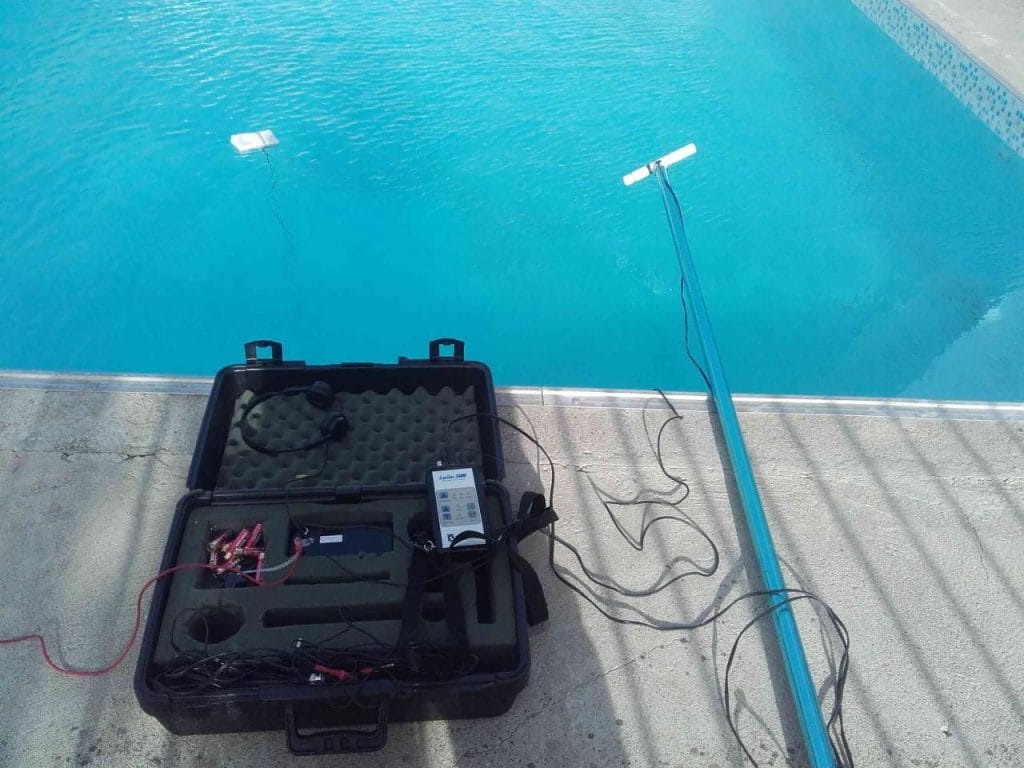
VIC Leak Detection’s acoustic equipment in use. Two sensors positioned at different points allow the correlator to pinpoint the exact leak location.
What Is Acoustic Leak Detection?
Acoustic leak detection is a non-invasive method of finding hidden pipe leaks using sound. When water escapes from a pressurised pipe, it produces vibrations and noise as it forces its way through a crack, joint, or hole. That noise travels through the surrounding soil, concrete, or building material.
Specialist acoustic sensors and ground microphones can pick up those vibrations, even when the leak is buried half a metre underground or hidden inside a wall cavity. The technician then analyses the signal to pinpoint exactly where the pipe is losing water.
The key word is “pinpoint.” This is not a rough estimate. A skilled operator using professional acoustic leak detection equipment can identify a leak location to within centimetres, which means a plumber can go in once, at the right spot, and repair the pipe without unnecessary excavation.
The Science Behind It: How Leaks Make Sound
Every pipe under pressure produces a steady background hum as water flows through it. When that pipe develops a leak, the escaping water creates a new sound at the leak point. That sound has a specific frequency and character that differs from normal flow noise.
What Frequency Does a Pipe Leak Emit?
The frequency depends on several factors: the pipe material, the water pressure, the size of the leak, and the depth of the pipe. Plastic pipes and copper pipes produce different acoustic signatures. Deeper pipes and longer pipe runs dampen the signal before it reaches the surface.
Professional acoustic correlators and geophones are calibrated to detect these frequency ranges, filtering out background noise from traffic, wind, and nearby machinery so only the leak signal remains.
Why Underground Leaks Are Harder to Hear
Soil and concrete absorb sound energy. The deeper the pipe, the weaker the signal at the surface. This is why consumer-grade stethoscopes or “listening rods” are not effective for underground leak detection. Professional acoustic sensors are engineered to detect extremely faint vibrations and amplify the leak signal while suppressing environmental noise.
What Equipment Do Acoustic Detection Specialists Use?
There is no single piece of equipment for acoustic leak detection. Professional technicians typically carry a combination of tools, each suited to a different situation.
Ground Microphones and Geophones
A geophone is a highly sensitive ground-contact sensor. The technician places it on the surface above the suspected pipe run, whether that is a footpath, a driveway, a lawn, or a concrete slab. It converts ground vibrations into an electrical signal that is displayed and analysed in real time.
The technician moves the geophone along the pipe route, comparing signal strength at different points. The location where the signal is loudest and clearest is the leak point.
Acoustic Correlators: How Two Sensors Pinpoint a Leak
An acoustic correlator uses two sensors placed at different points along the same pipe run, often on service connection points or access valves. Each sensor records the sound of the leak simultaneously. Because sound travels through the pipe material at a known speed, the system can calculate the difference in time it takes the sound to reach each sensor.
That time difference, combined with the pipe length and material type, lets the correlator calculate exactly where along the pipe the leak is located. This is the most precise method available for underground pipe leaks, and it works through concrete slabs, bitumen, paving, and soil.
Leak Noise Loggers for Overnight Monitoring
In some situations, a leak is small enough that it is difficult to detect during the day due to background noise. Leak noise loggers are battery-powered acoustic sensors that can be placed at intervals along a pipe network overnight, when traffic and other interference is minimal. They record sound levels throughout the night and upload the data for analysis the next morning.
This approach is particularly useful for large pipe networks or commercial properties with complex underground pipework, where a single-visit survey may not capture a slow, intermittent leak.
Suspect a Hidden Pipe Leak?
VIC Leak Detection uses professional acoustic equipment to locate pipe leaks under concrete, underground, and inside walls. No digging. No unnecessary damage. Backed by our money-back guarantee.
The Acoustic Detection Process: Step by Step
Here is what happens when VIC Leak Detection carries out an acoustic survey at a Melbourne property.
- Initial assessment. The technician talks through the symptoms: rising water bills, damp patches, the sound of running water when taps are off. This helps identify the most likely pipe route and the best starting points for the survey.
- Pipe route tracing. Where the pipe layout is not known, the technician uses a pipe locator to map the underground pipe run before placing acoustic sensors.
- Sensor placement. Geophones or correlator sensors are placed at key points along the pipe. The technician systematically works along the run, recording signal data at each position.
- Signal analysis. The equipment filters background noise and identifies the frequency pattern of the leak. The technician pinpoints the location where the signal is strongest.
- Confirmation. In most cases, the acoustic result is confirmed using a second method, such as a pressure test or thermal imaging scan, before any repair recommendation is made.
- Mark and report. The exact leak location is marked on the surface. The technician provides a clear written report with the findings, which can be used by a plumber and, where relevant, by an insurer when lodging a water leak insurance claim.
Acoustic vs. Thermal Imaging: When to Use Each
Acoustic leak detection and thermal imaging are often used together, not instead of each other. Each method has strengths that complement the other.
| Detection Method | Best For | Limitations |
|---|---|---|
| Acoustic (sound-based) | Underground leaks, leaks under concrete slabs, deep buried pipes, long pipe runs | Very slow leaks may not produce enough sound; background noise can interfere in some settings |
| Thermal imaging | Leaks inside walls, under-floor leaks, roof cavity moisture, hot water pipe leaks | Requires a temperature differential to show moisture; works best on hot water lines or in cooler ambient conditions |
| Pressure testing | Confirming a leak exists before acoustic or thermal survey; isolating sections of a pipe run | Does not locate the leak; confirms presence only |
At VIC Leak Detection, our technicians assess each property individually and select the combination of methods most likely to produce a confirmed, accurate result. For a detailed explanation of how thermal imaging works alongside acoustic detection, see our post on how thermal cameras find water leaks behind walls.
Where Acoustic Detection Works Best
Acoustic leak detection is particularly well suited to:
- Underground water mains and service lines
- Leaks beneath concrete slabs, driveways, and footpaths
- Buried irrigation or pool plumbing
- Leaks in pipe runs under hard surfaces where excavation would cause significant disruption
- Commercial properties and strata buildings with complex pipe networks
- Situations where thermal imaging has identified moisture but has not confirmed the exact leak source
For pipe leak detection in Melbourne involving underground pipes or pipes beneath a concrete slab, acoustic methods are typically the first tool our technicians reach for.
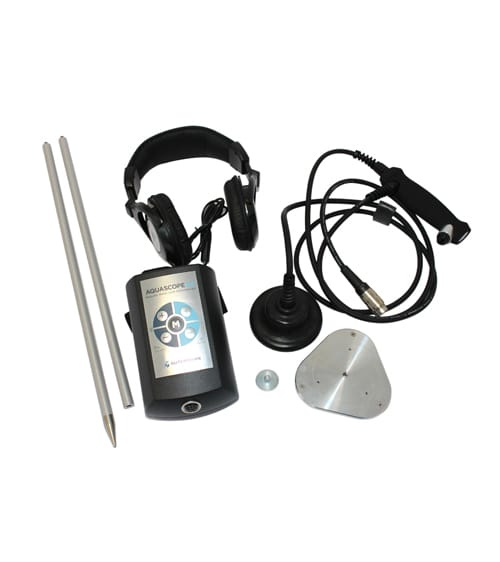
The ground microphone and probe kit, used by VIC Leak Detection technicians to listen for leaks through soil, concrete, and hard surfaces.
The Limits of Acoustic Detection
Like any detection method, acoustic leak detection works within certain conditions. There are situations where results may be less definitive.
When acoustic detection is more challenging:
- Very slow seepage through a degraded pipe wall with minimal internal pressure
- Pipes surrounded by very dense, water-saturated soil that absorbs sound heavily
- High ambient noise environments such as near busy roads or industrial machinery during operating hours
- Non-standard pipe materials that carry sound differently to common copper or PVC
This is why VIC Leak Detection combines acoustic methods with pressure isolation testing and thermal imaging when necessary. No single method is applied in isolation. Our goal is a confirmed result, not a best guess.
VIC Leak Detection: Why Melbourne Homeowners Trust Our Results
VIC Leak Detection serves residential, commercial, and strata properties across all Melbourne suburbs. Our technicians are licensed, fully insured, and experienced working with the specific conditions found in Melbourne’s built environment, including Victorian-era clay slab foundations, older copper pipework in inner-suburb homes, and the ground movement common in Melbourne’s outer growth corridors.
| What Sets Us Apart | What It Means For You |
|---|---|
| Experience | Specialists in Melbourne property types including Victorian-era homes, multi-storey commercial, and strata buildings. Real field experience, not just equipment ownership. |
| Expertise | Licensed technicians using professional acoustic correlators, geophones, and leak noise loggers calibrated for Australian pipe materials and conditions. |
| Authority | Money-back guarantee if the leak is not found. Transparent, upfront pricing. Written detection report provided for every job. |
| Trust | Same-day response available across all Melbourne suburbs. No unnecessary damage. You are told exactly what we found, where, and what to do next. |
For underground leak detection in Melbourne, acoustic methods are central to how we operate. Call us before a plumber starts digging. We find the leak first, so the repair is targeted, not exploratory.
Ready to Find That Leak?
Call VIC Leak Detection today. We locate pipe leaks under concrete, underground, and inside walls using professional acoustic equipment. No digging until we know exactly where to dig.
Call 1300 583 595
Book an Inspection
We find the leak or your money back. Serving all Melbourne suburbs.
FAQ: Acoustic Leak Detection
What is acoustic leak detection?
Acoustic leak detection is a non-invasive technique that uses sensitive listening equipment, such as geophones and acoustic correlators, to detect the sound of water escaping from a pressurised pipe. It allows technicians to locate hidden leaks under concrete, underground, or inside walls without breaking any surface.
How accurate is acoustic leak detection?
When carried out by a trained technician using professional equipment, acoustic leak detection is highly accurate. Correlator technology can identify a leak location to within centimetres in many conditions. Accuracy depends on pipe depth, pipe material, soil type, and ambient noise levels.
Can acoustic detection find underground leaks?
Yes. Acoustic leak detection is specifically designed for underground pipe leaks. Geophones detect vibrations through soil, concrete, and paving. Correlators calculate the exact leak point using the difference in signal arrival time between two sensors. It is one of the most reliable methods for leaks buried beneath driveways, lawns, and concrete slabs.
Is acoustic leak detection non-invasive?
Yes. The sensors are placed on the surface above the pipe; nothing is drilled, cut, or removed during the survey. Any excavation or repair work only happens after the leak location has been confirmed, and only at that specific point.
How long does acoustic leak detection take?
Most residential acoustic surveys are completed within one to two hours. Larger properties, complex pipe networks, or situations where a leak noise logger needs to be deployed overnight may take longer. Your technician will give you an estimated timeframe before work begins.
Can acoustic sensors detect gas leaks?
Acoustic technology can be used to detect pressurised gas leaks as well as water leaks, since escaping gas also produces vibrations. However, gas leak detection typically requires specific equipment and licensing. For gas leaks in Melbourne, always contact a licensed gas technician. Do not attempt to locate a gas leak yourself.
How is acoustic leak detection different from thermal imaging?
Thermal imaging detects temperature differences caused by moisture, making it ideal for leaks inside walls, under floors, and in ceiling cavities. Acoustic detection listens for the sound of escaping water, making it ideal for underground and under-slab leaks. The two methods complement each other. See our article on how thermal cameras find water leaks behind walls for a full comparison.